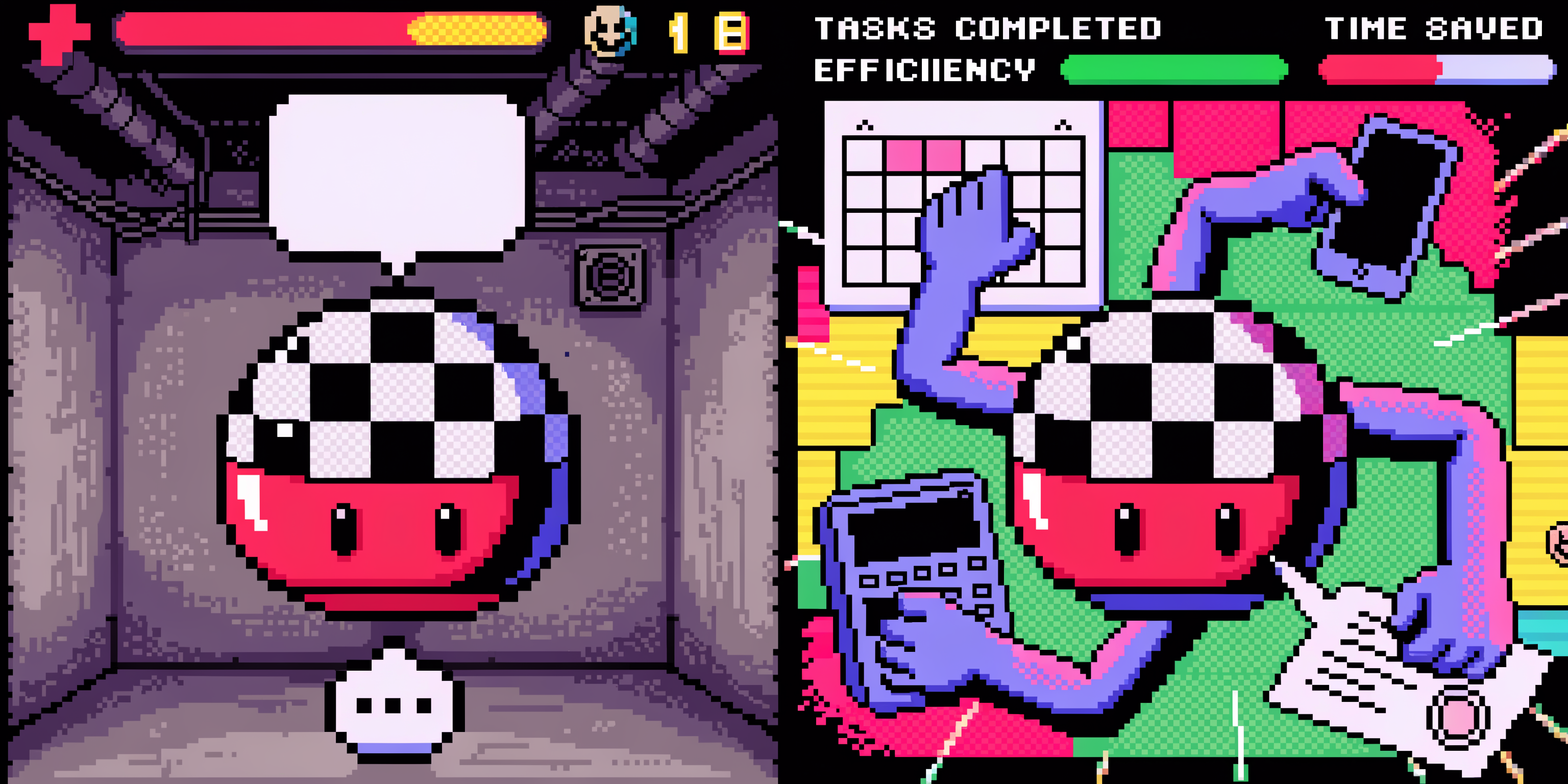
12 Logins and a Spreadsheet Holding It Together
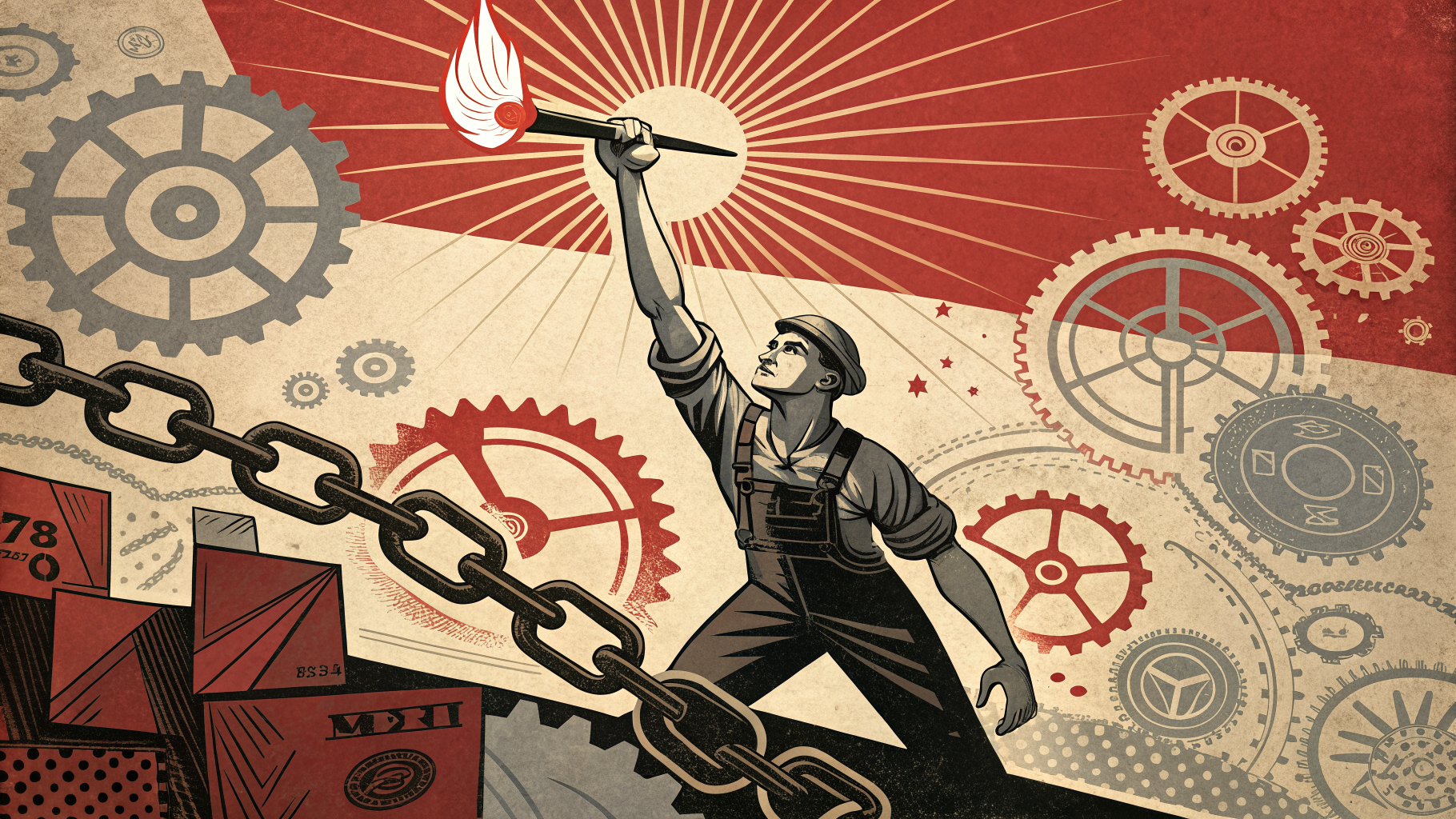
Illustration: Ciigma × Recraft V3
12 logins. One spreadsheet holding it all together.#
Productiv's 2024 SaaS report found that the average mid-market company uses 315 SaaS applications. Small businesses use fewer, but the pattern is the same. CRM, scheduling, invoicing, email marketing, lead capture, reviews, chat, analytics. Each tool does one thing. None of them talk to each other the way your business actually works.
So you build bridges. Zapier automations that break when a field name changes. CSV exports pasted into spreadsheets. A VA who manually copies data from one dashboard to another. Duct tape dressed up as a tech stack.
We see it on every audit. Email platforms that don't connect to the CRM. Point-of-sale systems that never cross-reference data or trends. Spreadsheets tracking critical metrics with no change history. The tools exist. They just exist in isolation, each one doing its job while the business runs on the gaps between them.
SaaS was built for the average. Your business is specific.#
A scheduling tool built for 50,000 businesses can't know that your HVAC company books differently in summer than winter, or that your real estate team needs intake questions that change by property type, or that your food distributor qualifies leads based on order volume thresholds that no generic CRM tracks.
Off-the-shelf software optimizes for the widest possible market. That means features you don't need, workflows that don't match yours, and a settings page where you spend hours trying to approximate how your business actually runs.
Custom AI software starts from the opposite direction. It begins with your operation. Your intake flow. Your qualification logic. Your team's actual daily rhythm. Then it builds exactly that, with AI handling the parts that used to require a human sitting at a screen.
Three service businesses. Three custom builds. Real numbers.#
We've built custom AI systems across real estate, food service, and immigration law. Different industries, same principle: software shaped to the business outperforms software the business shapes itself around.
OpenAccess Realty had 120,000 Instagram followers flooding their agents with DMs, comments, and inquiries. No off-the-shelf CRM could handle the intake volume at the speed their market demanded. We built a custom AI booking system that qualifies leads, answers questions, and schedules appointments in under one second.
Prime Origin Foods distributes high-end imported meats to restaurants and retailers across Texas. Their sales team was prospecting manually, researching leads one by one, crafting individual outreach. We built a custom AI prospecting engine that identifies ideal buyers, researches them automatically, and generates personalized outreach at scale.
Trego Immigration Group needed to scale consultations without diluting the trust that immigration clients require. Generic chatbots felt impersonal. Generic ad funnels converted poorly. We built a custom AI lead generation stack with avatar-driven video ads and an intelligent chatbot that qualifies prospects with the sensitivity the practice demands.
How OpenAccess went from drowning in DMs to 100 bookings/week with custom AI
Read the full case studyWhen off-the-shelf makes sense (and when it doesn't)#
SaaS works well for commodity functions. You don't need custom accounting software. QuickBooks is fine. You don't need a custom email client. Gmail handles it.
But the moment you hit a workflow that is core to how your business makes money, generic tools start costing you. Lead intake, qualification, follow-up, booking, outreach, re-engagement. These are the processes where your competitive advantage lives. The way you handle an inbound lead differently than your competitor is the reason clients choose you. Handing that process to a tool designed for everyone means competing on the same playbook as everyone else.
If the workflow is a commodity (email, accounting, docs), use SaaS. If the workflow is how you make money (lead handling, qualification, booking, outreach), custom AI will outperform every off-the-shelf tool you've tried.
Custom AI software turns your specific operational knowledge into a system that runs without you. It encodes the judgment calls your best employee makes and executes them at machine speed, 24/7, without sick days or context switching.
The cost question (flipped)#
"Custom sounds expensive." We hear it constantly. Here's the math that changes the conversation.
A custom AI system built for your specific workflow replaces multiple subscriptions, eliminates integration overhead, and captures revenue you're currently losing. OpenAccess went from drowning in DMs to 100 bookings a week. Prime Origin tripled their pipeline with a fraction of the manual effort. Trego 5X'd their conversion rate.
The real expense is paying for 12 tools that don't do the one thing that actually matters for your business.
Is your tech stack working against you?#
Stack audit
- You're paying for 3+ tools that don't share data with each other
- Someone on your team spends time copying data between platforms
- You've built Zapier automations that break regularly
- Your lead follow-up depends on human memory
- You've outgrown a SaaS tool but the migration feels impossible
- Your most important workflow still runs through a spreadsheet
If your tech stack feels like it's working against you instead of for you, that's because it is. It was built for a hypothetical average business. You are not that business.
The service businesses pulling ahead right now are the ones that stopped subscribing to someone else's vision of their workflow and started building their own. OpenAccess, Prime Origin, and Trego did exactly that. The results speak in numbers, not promises.
Custom AI software for your operation. Not templates. Not no-code. Production-grade systems built around how your business works.
See our build practiceConcept, draft & direction
Claude, tuned to Ciigma's editorial voice
AI editor